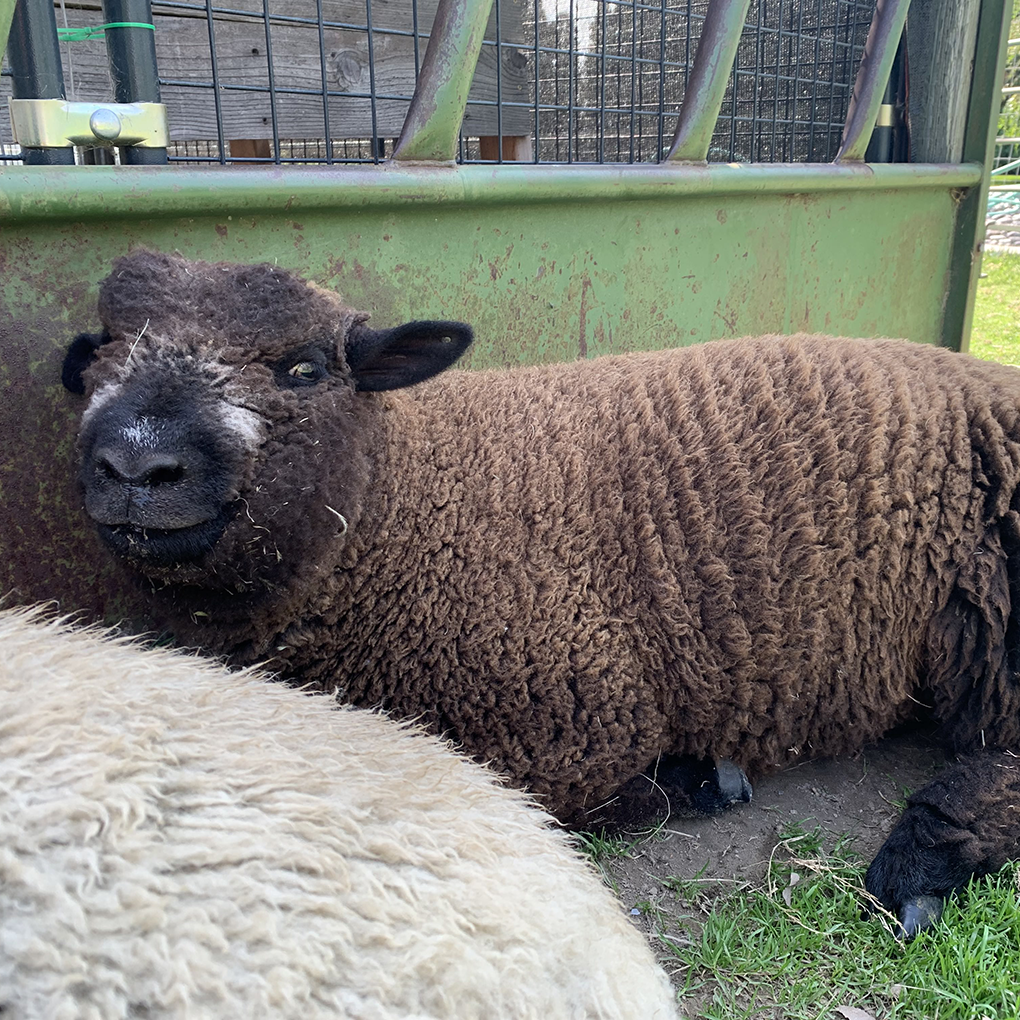
Babydoll Southdown Sheep originated in the South Downs region of England. They were imported to the U.S. in the early 19th to 20th century. As electricity became standard in all households, herbicides became more common, and breeding for larger sheep became more popular, the Babydoll sheep fell out of favor and were almost eliminated. The breed was saved in the 1980s, and now is a popular choice for smaller farms.
They are a dual sheep, for both meat and wool, but mostly used for wool today. The wool is one of the finest of all breeds of English sheep; about 2-3 inches in length, with a micron of about 23-29, meaning it can be worn next to the skin. In addition, it is good for needle-felting, as well as blending with slick fibers (e.g. Angora) due to the high barb count.
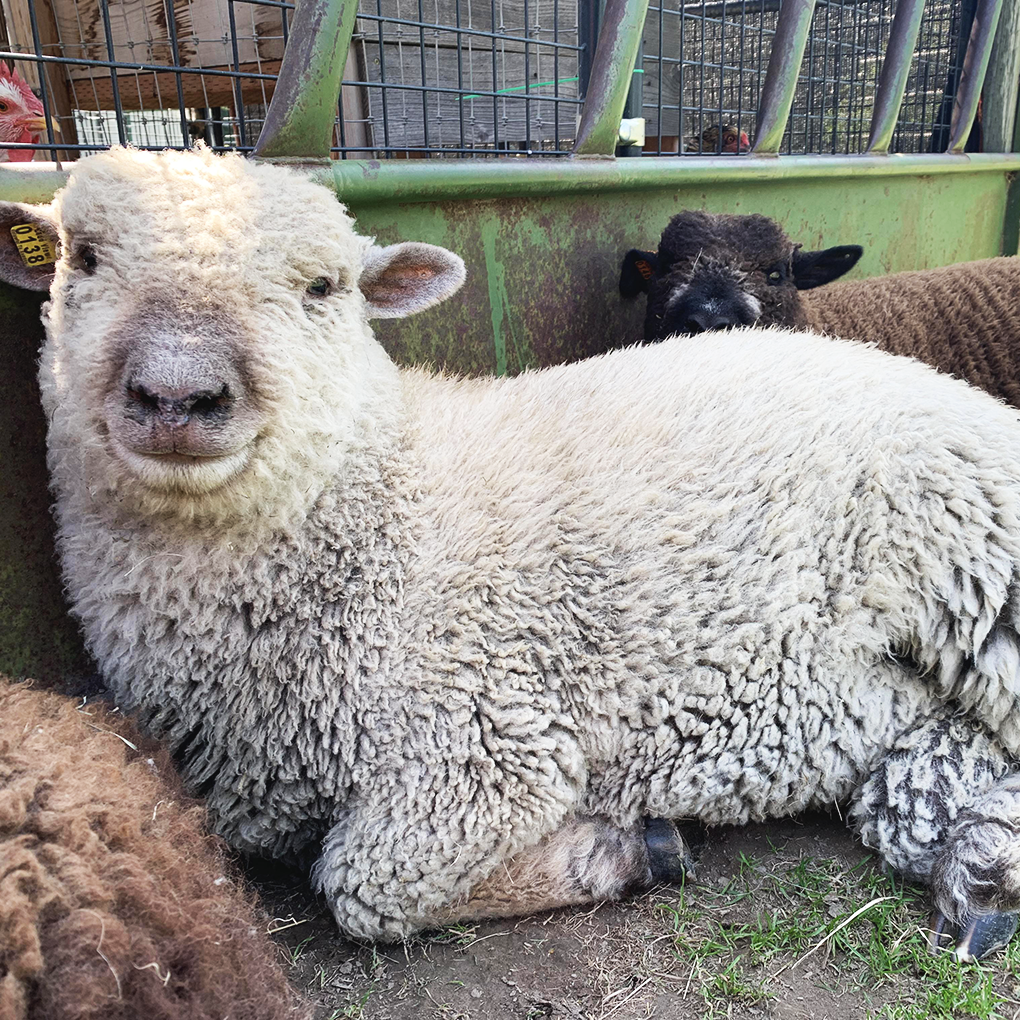
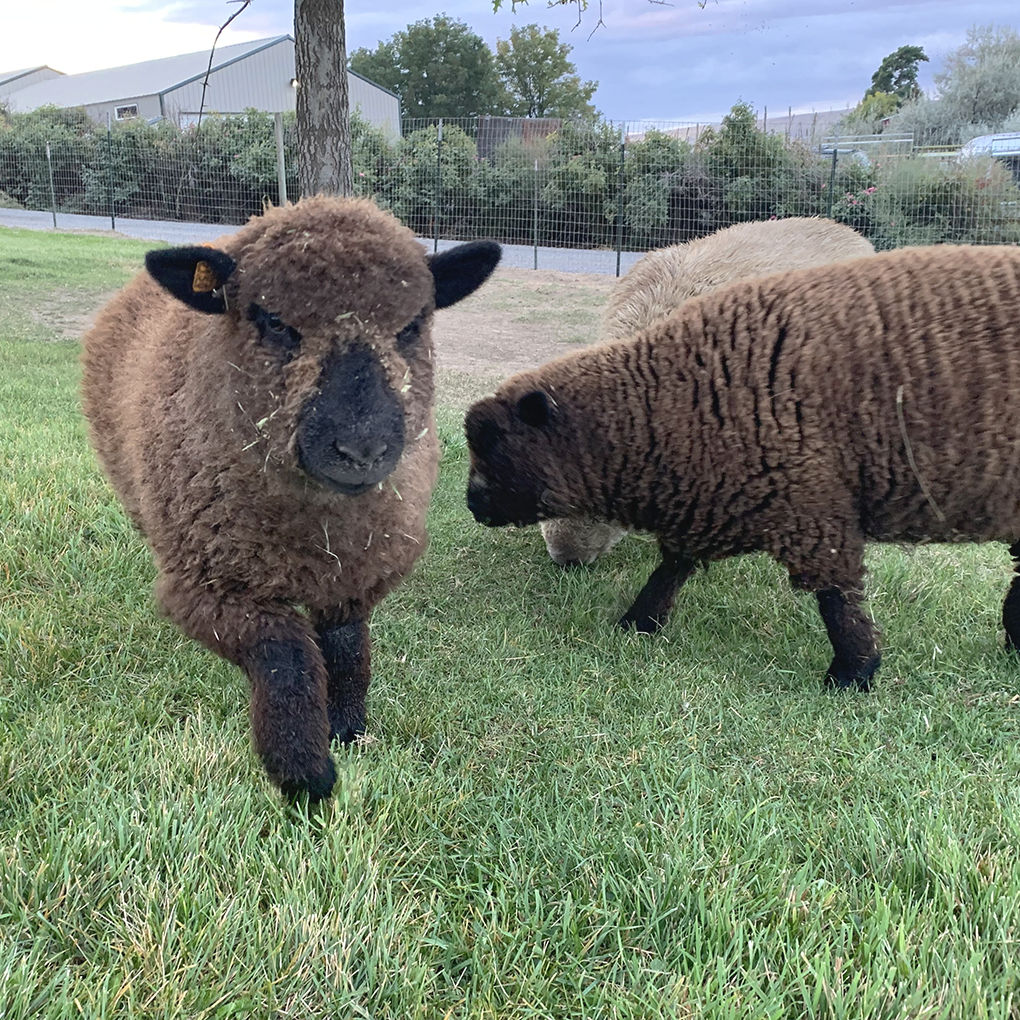
Babydoll Southdown Sheep are docile, so tend to make good pets, much like dogs. They have a short stature (about 24 inches at the shoulder), and cannot stand on their hind legs. In addition, they are wonderful organic weeders, add fertilizers to land via droppings, and produce wonderful fiber. They are fairly easy to take care of, as long as they have a few needs met:
- Shelter
- Hay/Grass/Grain
- Water
- Husbandry
- Toenails
- Shearing
- Medicines
- Love